Why comparing price first usually costs more
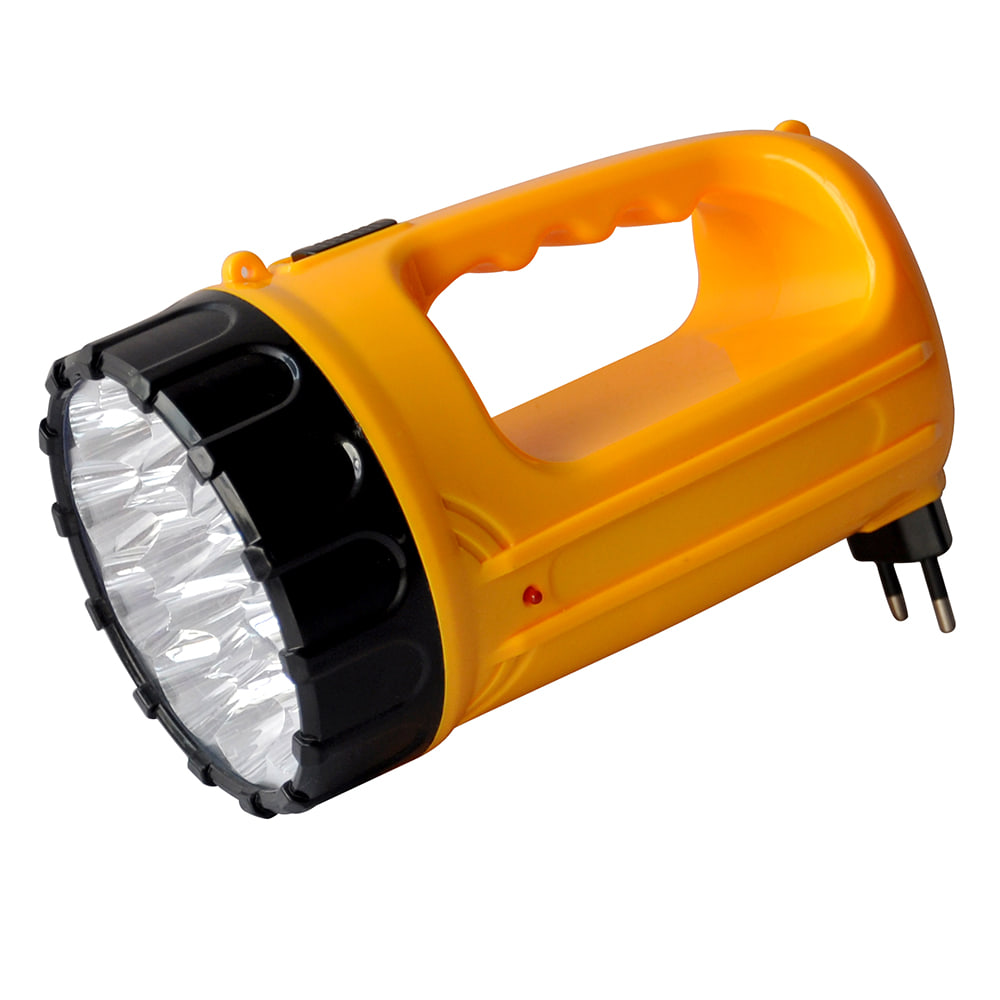
A rechargeable torch is four subsystems in a plastic shell: the LED and optics, the driver board, the battery pack, and the charging plug. Two quotations that look identical on a spec sheet can differ by 30–40% in cost because one supplier buys welded packs from a nearby workshop and the other welds and tests them in-house. The difference shows up six months later as dead units in a retail channel, not in the quotation.
The practical rule: verify capability first, then compare price on a like-for-like specification — same LED count, same battery capacity, same plug, same packaging.
The seven checks
1. Does the business licence match what they actually make?
Ask for the business licence and read the registered scope. "Trading" or "import and export" without a manufacturing scope is a signal, not a disqualification — plenty of good exporters work that way — but it means you are buying through a middle layer and should ask who the producing factory is.
2. Is the housing moulded in-house?
Ask how many injection moulds for torch housings they own and request a video of the moulding shop with the machine running. A factory that owns moulds can change colour, texture and logo embossing without a third-party tooling negotiation. A supplier that has to borrow a mould will quote longer lead times for any cosmetic change.
3. Is the battery pack welded and tested on site?
This is the single most predictive question. Ask to see the spot-welding station and the aging or charge-discharge rack. Packs should be cycled before assembly, and every finished unit should be switched on and charged before packing. A supplier who cannot show a test bench is buying finished packs and hoping.
4. Do they quote the plug and voltage you actually need?
Built-in AC plug torches are market-specific: EU Europlug, UK BS 1363, US NEMA 1-15, AU/NZ, and Brazil NBR 14136 (two round pins, 127 V or 220 V). Confirm the plug standard and the mains voltage in writing on the quotation. A supplier who lists one plug for all markets is not moulding plugs — they are buying adapters.
5. Can they keep the mass run identical to the sample?
Ask what they change between sample and production. Honest answers mention LED binning, battery supplier and packaging print. Then agree a golden sample: a sealed, signed, dated unit held by both sides, with the LED count, battery capacity, beam pattern and housing colour recorded on the label.
6. What test documentation comes with the shipment?
For a rechargeable torch you should expect, at minimum: an incoming battery inspection record, a 100% function and charging test record, and a carton drop or stacking record on request. If the product contains a lithium pack and travels by air or as a standalone battery, add the UN38.3 test summary and the MSDS. Ask whether the report is issued for your order or recycled from another customer — the date and the model number will tell you.
7. What happens after the container leaves?
Ask for the spare-parts policy in numbers: what percentage of lenses, switches and battery packs they will ship with a repeat order, and how a dead-on-arrival unit is handled. A supplier with an assembly line usually has loose parts on hand; a trader usually does not.
The checklist at a glance
| Check | Question to ask | Red flag |
|---|---|---|
| Registered scope | Send the business licence | Scope lists no manufacturing and no factory address |
| Mould ownership | How many housing moulds do you own? Video of the machine? | Cannot show a moulding shop |
| バッテリー assembly | Photo of the spot-welding station and aging rack | No test bench, packs arrive sealed from outside |
| Plug and voltage | Which standard for my market, in writing? | One plug quoted for every destination |
| Sample control | Will you sign and seal a golden sample? | Only photos, no sealed reference unit |
| Documentation | Test records for this order, UN38.3 if lithium | Undated reports, another model number |
| After-sales | Spare-parts percentage and DOA policy | No answer beyond "we will handle it" |
Three traps that still catch experienced buyers
- The free sample that is not the production sample. Samples are often built by an engineer from selected components. Ask for a sample pulled from a production carton, not from the sample room.
- The upgraded LED count. A "15 LED" housing can be filled with 12 LEDs and three dummies. Count the lit dies in a dark room during the video call.
- The plug that fits but is not approved. Physical fit is not compliance. If your market regulates plugs, the mould has to match the standard, not just enter the socket.
Putting the checklist to work
Ask any shortlisted supplier for the evidence you would check on a factory video call: where the housing tool is kept, how the battery pack is assembled, and what test record comes with the shipment. For every order we supply incoming battery inspection, a 100% function and charging test, and a signed golden sample on request.
A custom project normally starts with a physical unit, a dimensioned drawing or a 3D file. The supplier then evaluates the LED, driver, battery and plug, quotes tooling and MOQ separately, and builds pre-production samples for approval before the mass run. Agree the written specification before paying any deposit.